Rutted Gravel Driveway Gets a Full Refresh
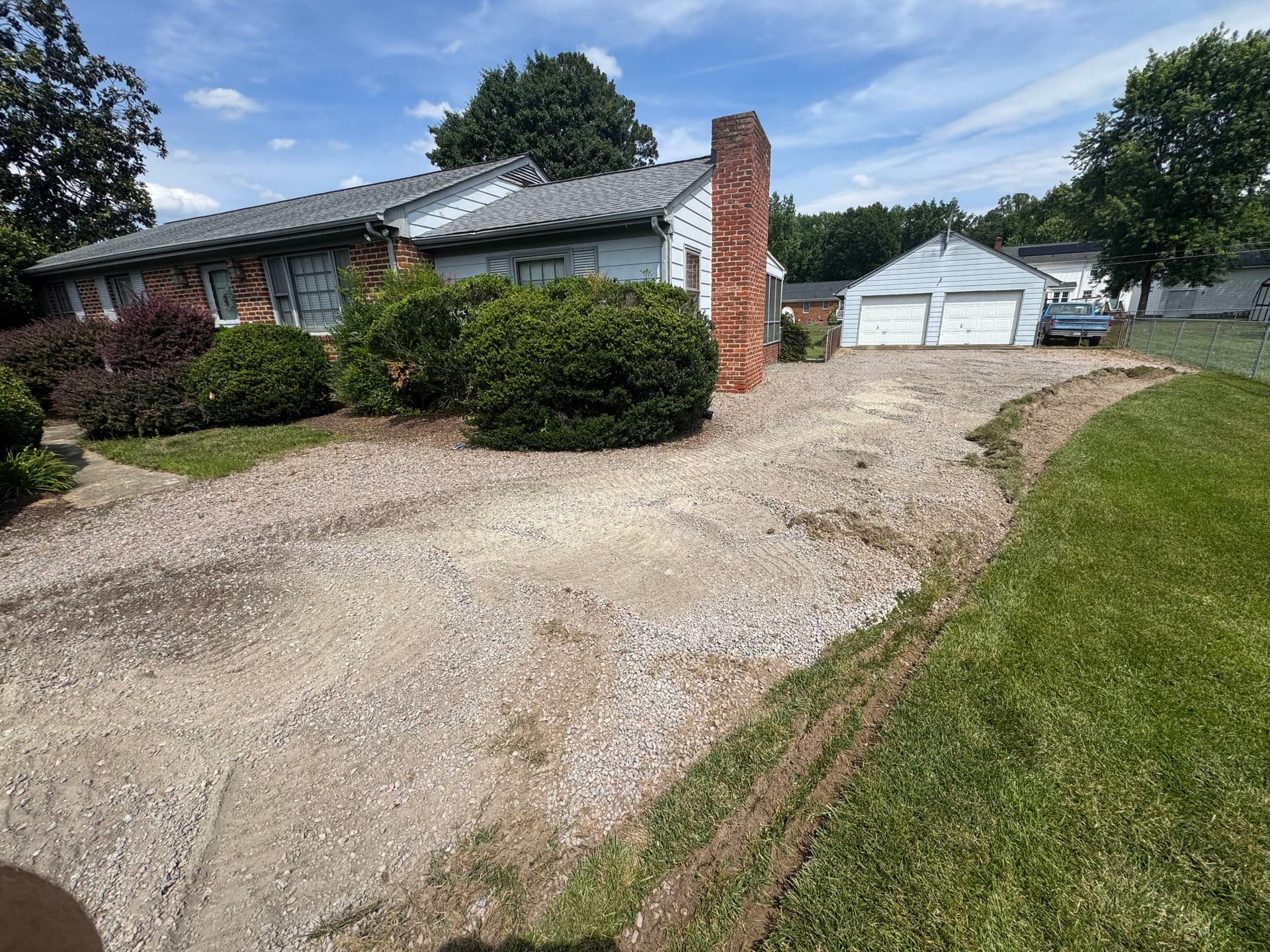
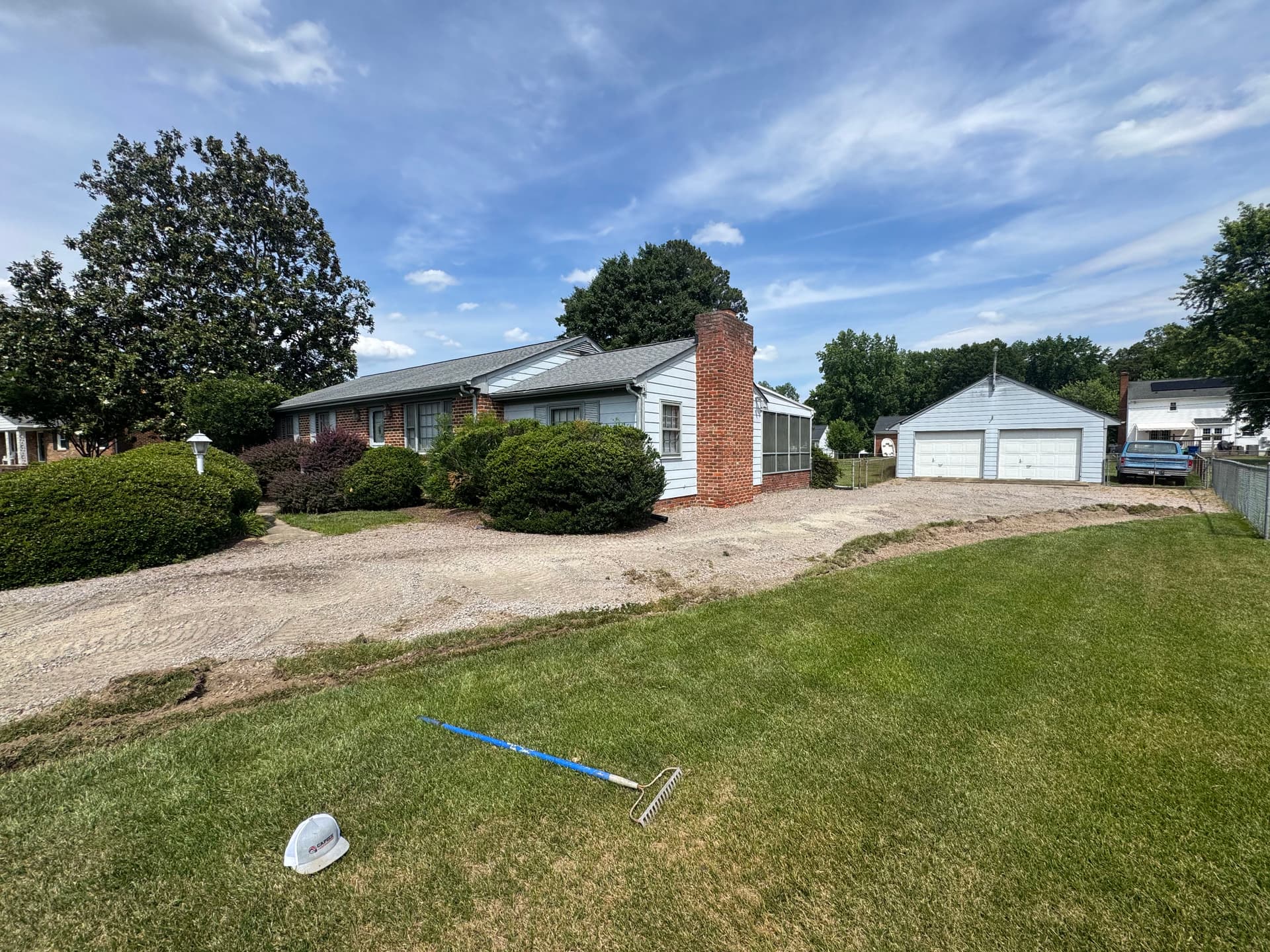
Gravel driveways are low-maintenance - until they're not. Over time, heavy rain and daily traffic can push gravel to the edges, dig ruts into the surface, and leave you with a driveway that's more dirt than stone. That's exactly what we were dealing with here.
The surface had thinned out significantly, with bare spots and uneven ground showing up across the whole area. We started by grading and leveling things out before bringing in a fresh load of clean stone. Getting the base right before adding gravel is what separates a repair that lasts from one that falls apart after the first good rain.
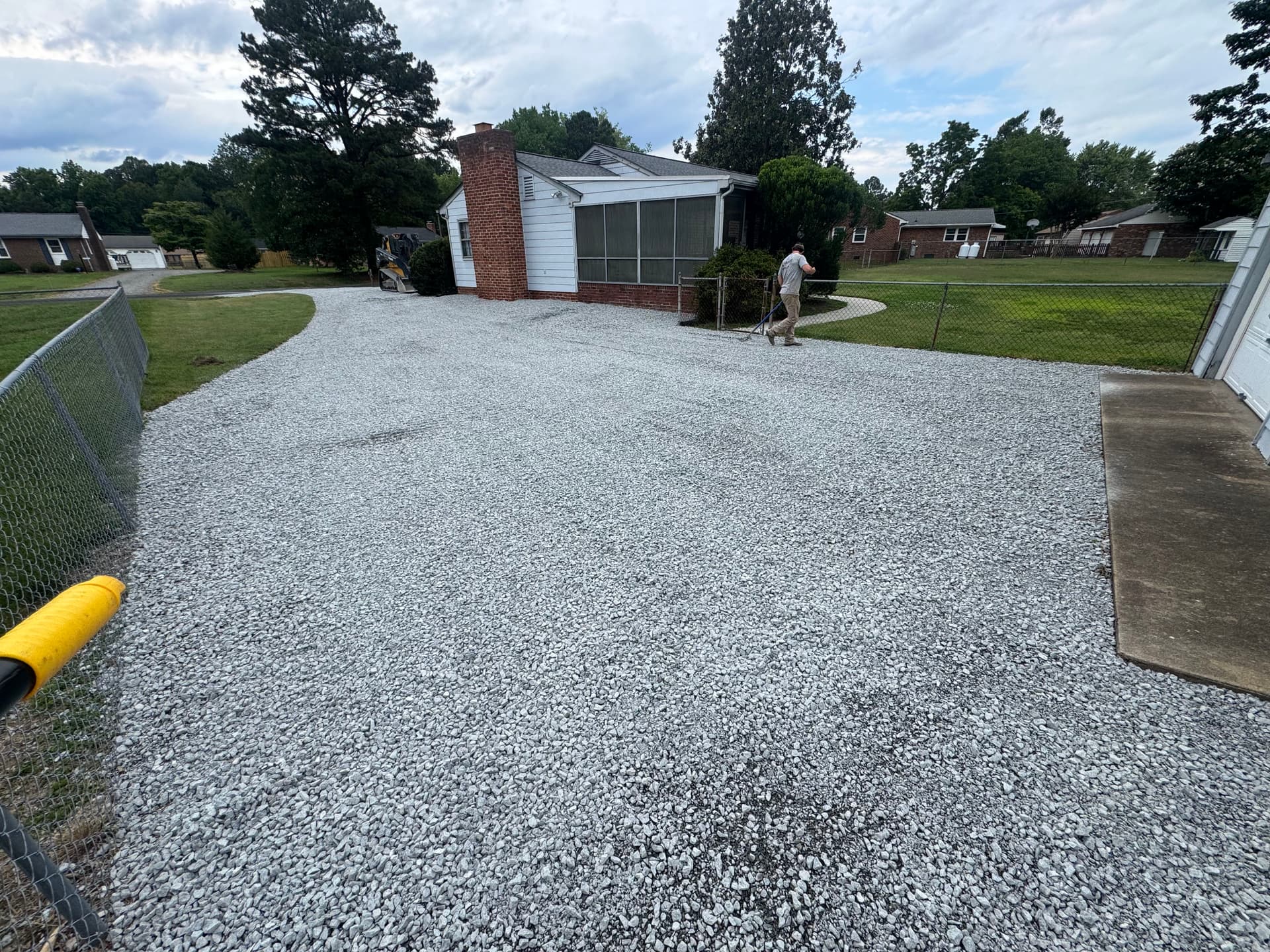
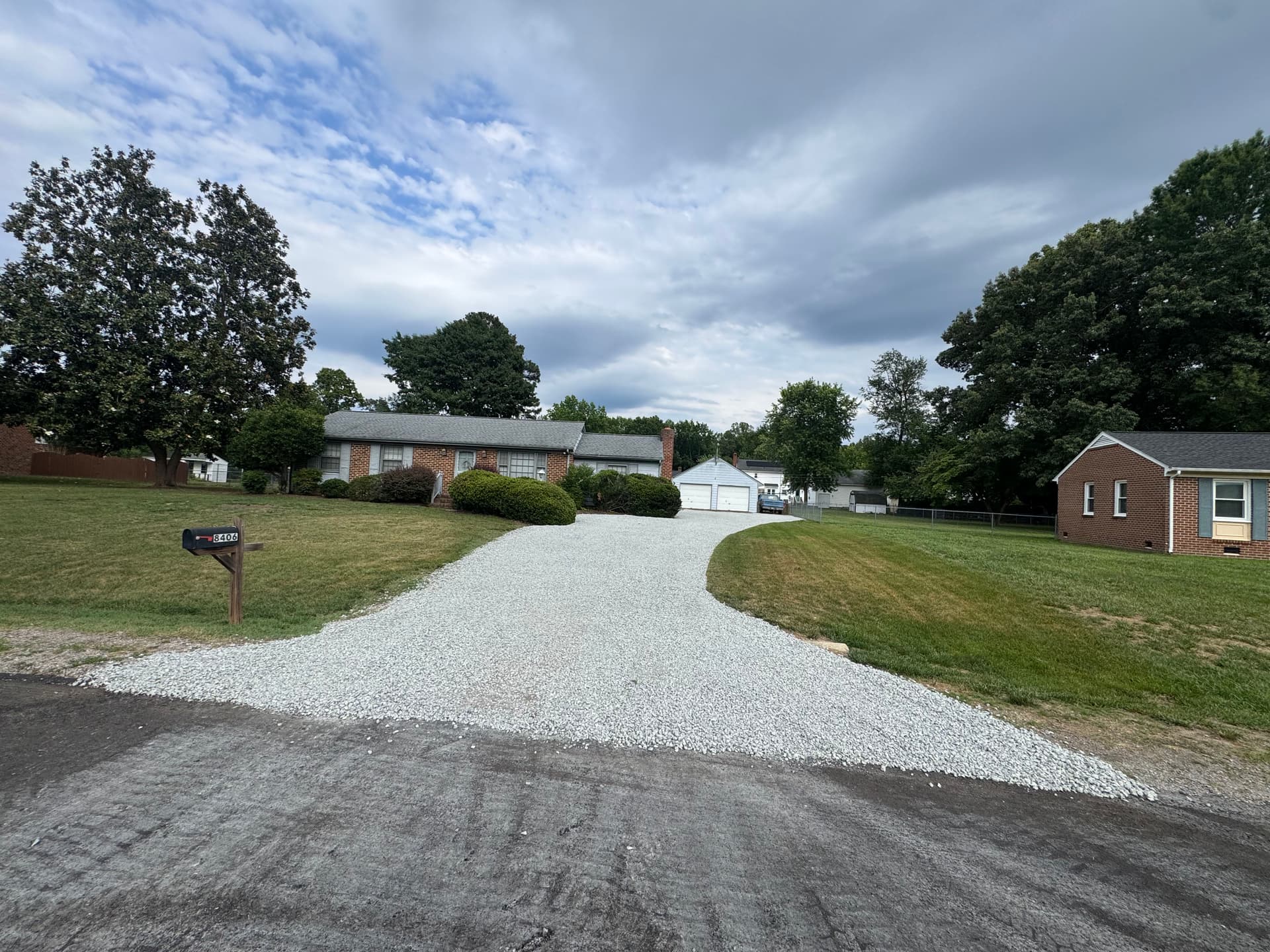
Once the grading was done, we spread and hand-finished the new gravel across the full driveway - from the road all the way back to the detached garage. The crew worked the stone into an even, solid layer that rolls and drains the right way. No soft spots, no low areas collecting water.
The difference is hard to miss. What was a worn-out, patchy surface is now a clean, uniform driveway that's actually functional again. It holds its shape, looks sharp from the road, and makes pulling in and out a lot smoother day to day. That's what good gravel driveway maintenance is supposed to do.
If your driveway is getting rough around the edges - literally - this kind of work is worth doing sooner rather than later. Letting ruts and thin spots go usually means more material and more work down the road.